
Why Québec City, Québec
When Americans think of Canada it usually is of the “Big 3” cities of Toronto, Montreal, and Vancouver. We plan to visit all of those cities in the future but elected to go to Quebec City first. Québec City is the 12th largest city in Canada with about 550,000 residents in the city and about 839,000 in the metropolitan area. It is the capital of Québec, Canada’s second largest province (about three-fifths of Canadians live in Ontario or Québec). Of Canada’s 10 provinces Québec is the only French-speaking one.
Québec City often is noted for its European feel, sometimes called the most European place in North America. For some articles on this look here, here, here.
The name “Québec” comes from the Algonquin word for “narrow passage” or “strait” which refers to the area around Quebec City where the St. Lawrence River narrows. This and the cliffs made Québec City a perfect location to be the capital of “New France.” Due to its status as the capital of New France the city was walled. Québec City remains the only walled city in the United States or Canada.
We went in early June. Québec City can be cold but the typical temperatures in early June are reasonable. It also was roughly halfway through my first full year working at Advocates for Highway and Auto Safety. For these reasons going in June made sense. If you go, make sure to do so in the summer because it can be cold the rest of the year.
Getting There
Due to its relatively small size, direct flights from the United States are rare even for a large metropolitan area like Washington, D.C. with three major airports. On the way to Canada, we took Air Canada from Reagan Washington National Airport in Arlington, Virginia to Montreal and then took a connecting flight to Quebec City. On the way back we flew on United Airlines to Newark Liberty International Airport before flying to Washington Dulles International Airport in Sterling, Virginia. Connections are annoying and consume a lot of time so that is a demerit for Québec City relative to places like Montral, Toronto, and Vancouver who have direct flights from major American cities. Is Québec City worth the slight hassle? Let’s see.
Québec City’s airport is small but efficient in terms of having the basic things you would expect at a decent-sized airport. It is about 20-25 minutes from downtown Québec. We stayed at the Hilton Quebec. The accommodations and amenities were great as you would expect from a Hilton. So was the location. The Hilton is in downtown and right across from the National Assembly (Québec Parliament) and only a 5–10-minute walk from the Old City. Other American hotels, Marriott and Delta also are in the same area.
Another thing to note about the Hilton is there are rental cars available at the hotel. Both Avis and Budget have offices located at the back behind the hotel restaurant. Most people will not need a rental car as tourist sites are within walking distance from downtown and rideshares and taxis are available but if you want to venture outside of Québec City having rental cars in the hotel are a plus.
Great Dining
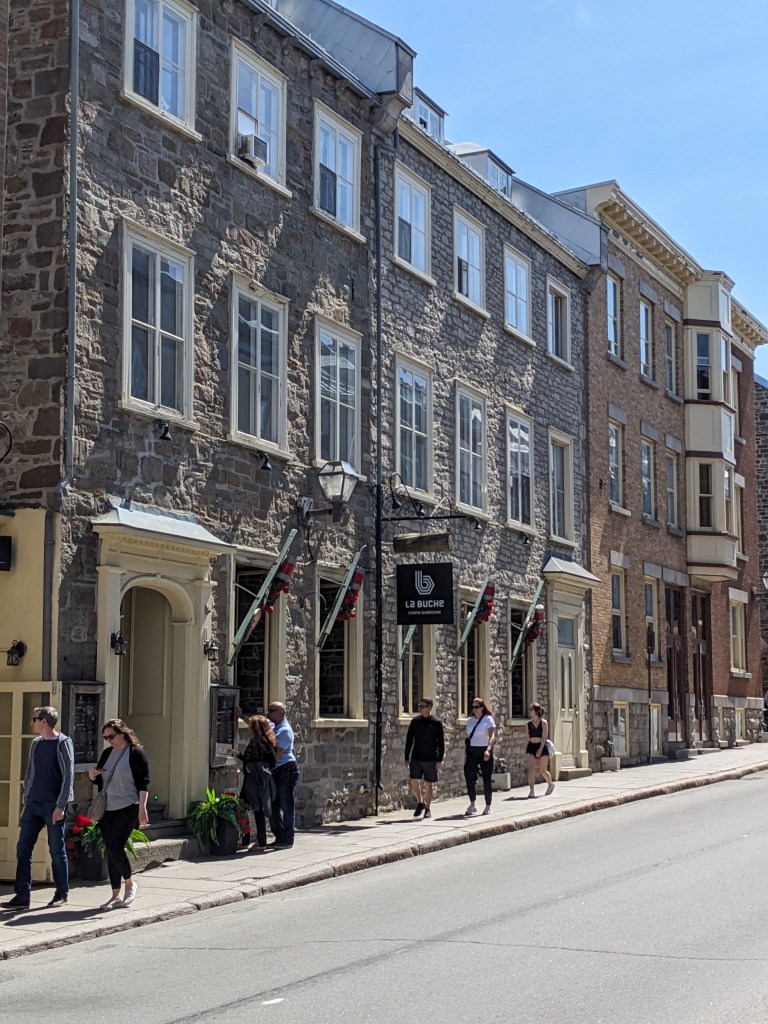
We landed around dinnertime. We did not want to go to Québec and have the kind of food we could find in the United States, so we asked the Hilton concierge for recommendations for places that featured quality local Quebecois cuisine. He recommended two places, Restaurant Le Buche and Aux Anciens Canadiens. The former is closer to the hotel, so we went there first.
La Buche is among the first places you will see entering the Old City from a downtown hotel and after passing through the city walls via the St. Louis Gate, also known as the Porte Saint-Louis. Le Buche had a lively vibe with two indoor sections and an outdoor patio. We were lucky to get window seats looking out onto the street. The food was great, as was the atmosphere and service. They have a unique setup where everyone washes their hands at a communal setup that is akin to a tub with faucets. Quebecois food, which is magnificent, essentially is French food infused with Canadian ingredients.
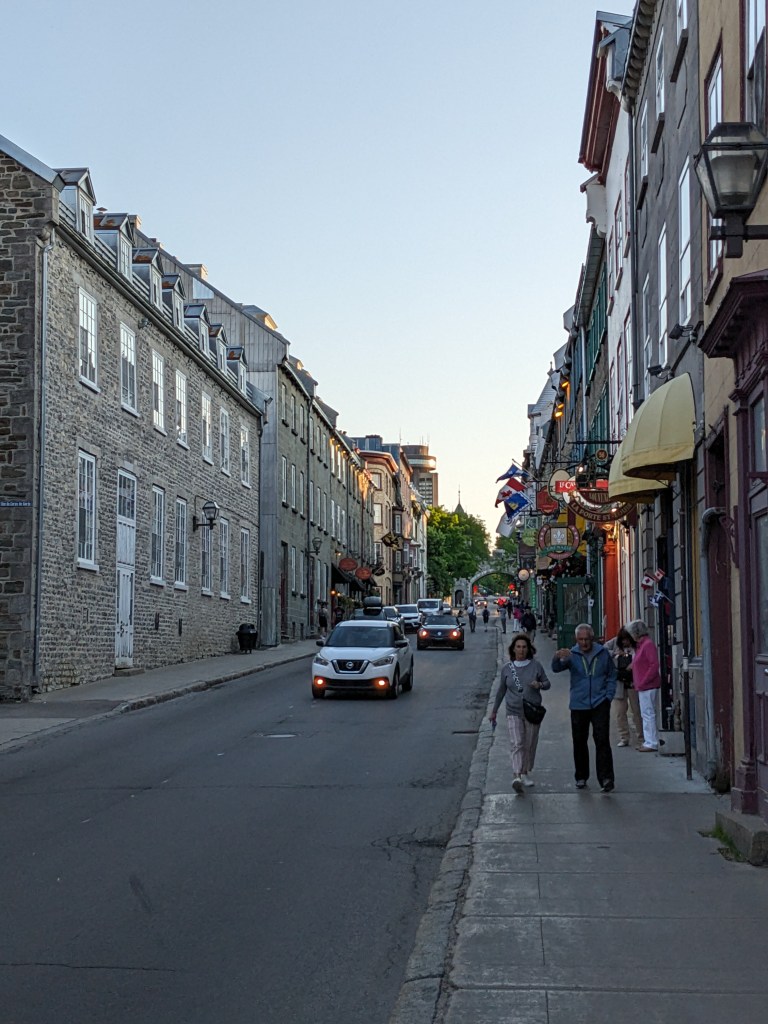
Afterwards we walked a bit around the Old City. Everything is close, walkable, and safe. Cars are permitted in the Old City but are restricted to low speeds.
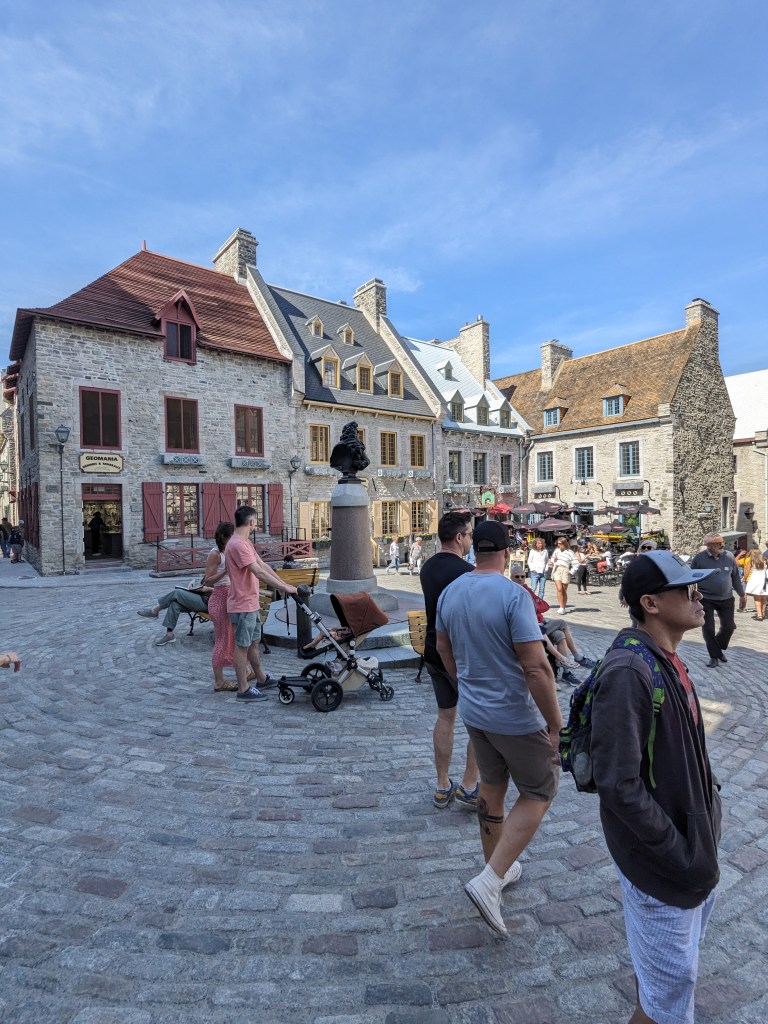
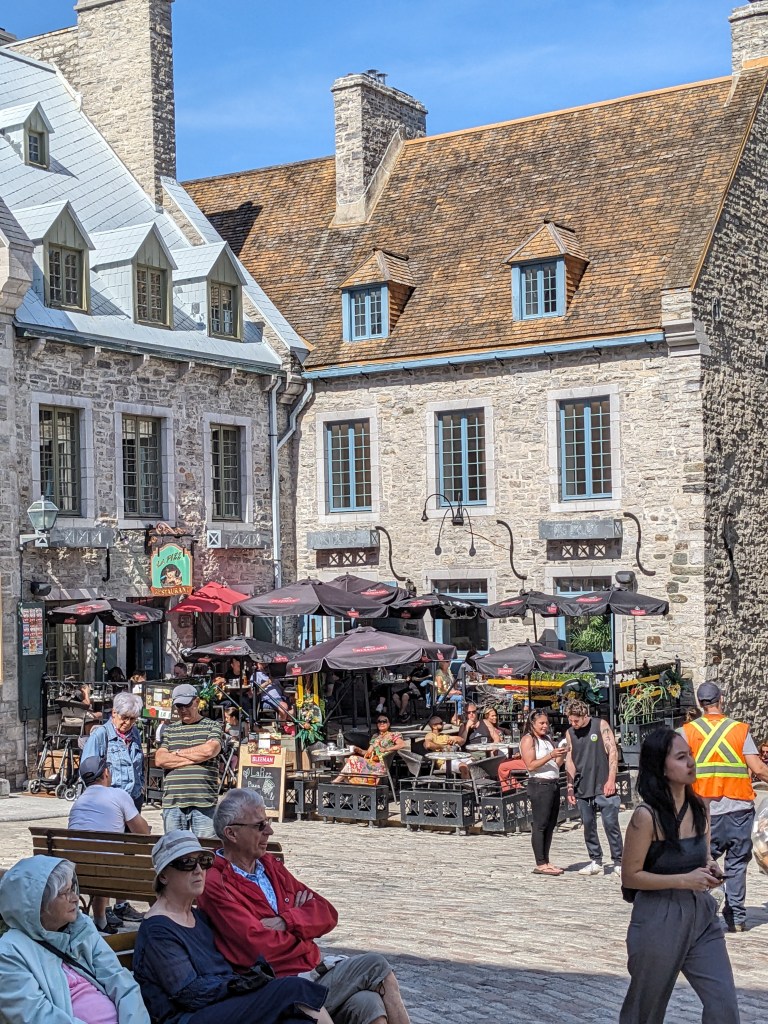
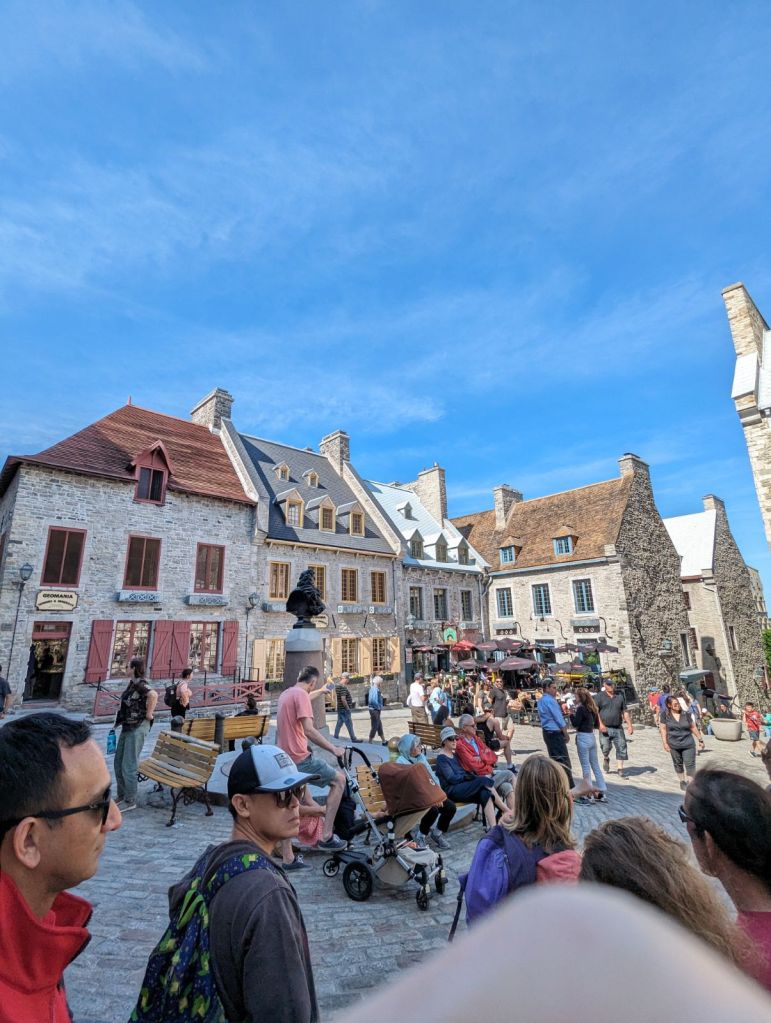
Another place worth noting is La Pizz Place Royale in Place Royale. This is a pizza place. The pizza is good but what sets it apart is its location on Place Royale (more on that later). You can get a seat outside and soak in the views which we did.
1640 Bistro is another standout. It sits on the “town green” on the other side of the Chateau Frontenac (more later). We again sat outside to absorb the views and lively activity as people walked around the green, to the boardwalk, and to various points in the Old City.
L’Omelette was our favorite breakfast spot. This, like Le Buche, is on Rue Sainte-Anne. L’Omellette is a small place but provides features good food and attentive, quality service.
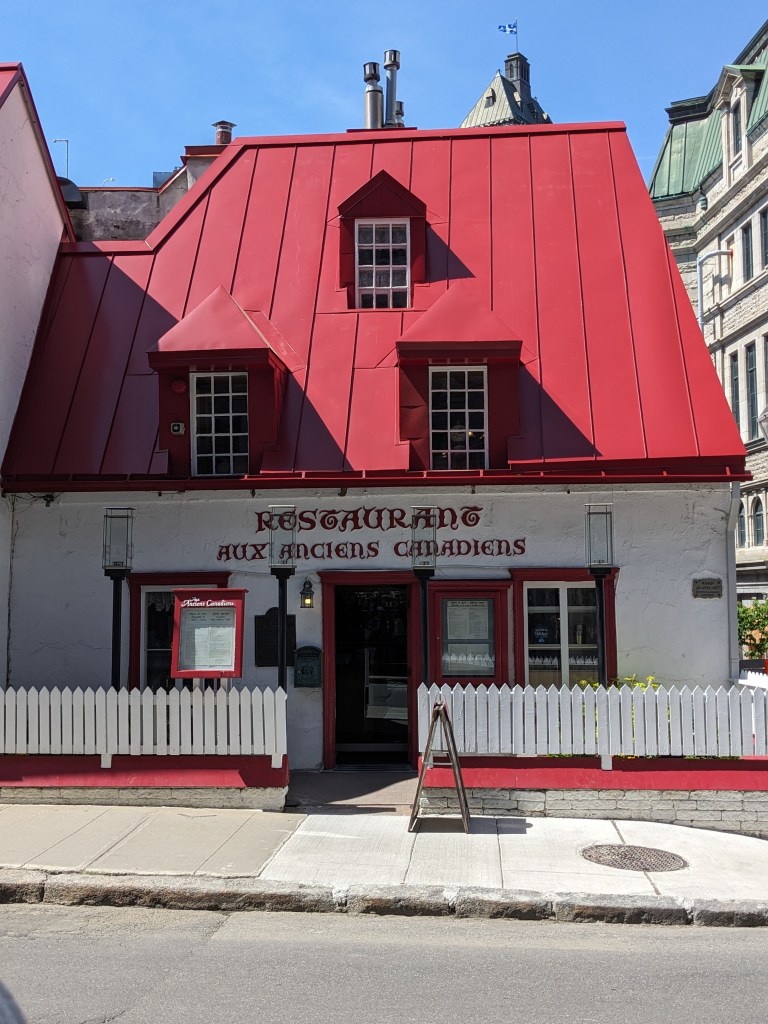
It was Restaurant Aux Anciens Canadiens whose star shone the brightest, though. Aux Anciens Canadiens is located in the oldest house in Québec City as it dates back to 1675-1676. The building warrants its own Wikipedia article. Walking into the building is a step back in time. It is not just the building’s look and feel. The staff wore period dress redolent of being in Williamsburg, Virginia. There is a downstairs and upstairs dining area. We preferred and went upstairs. It is crowded due to the age of the structure and its root as a home, but the small space only adds to the charm. The food was superb.
Fairmont Le Château Frontenac
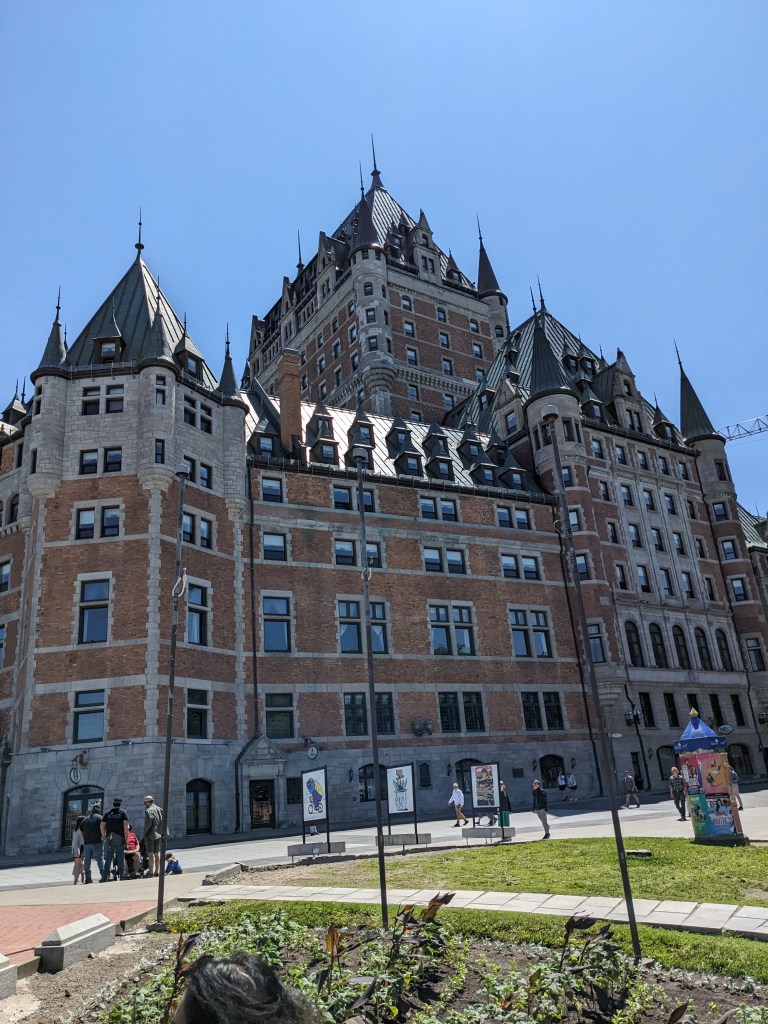
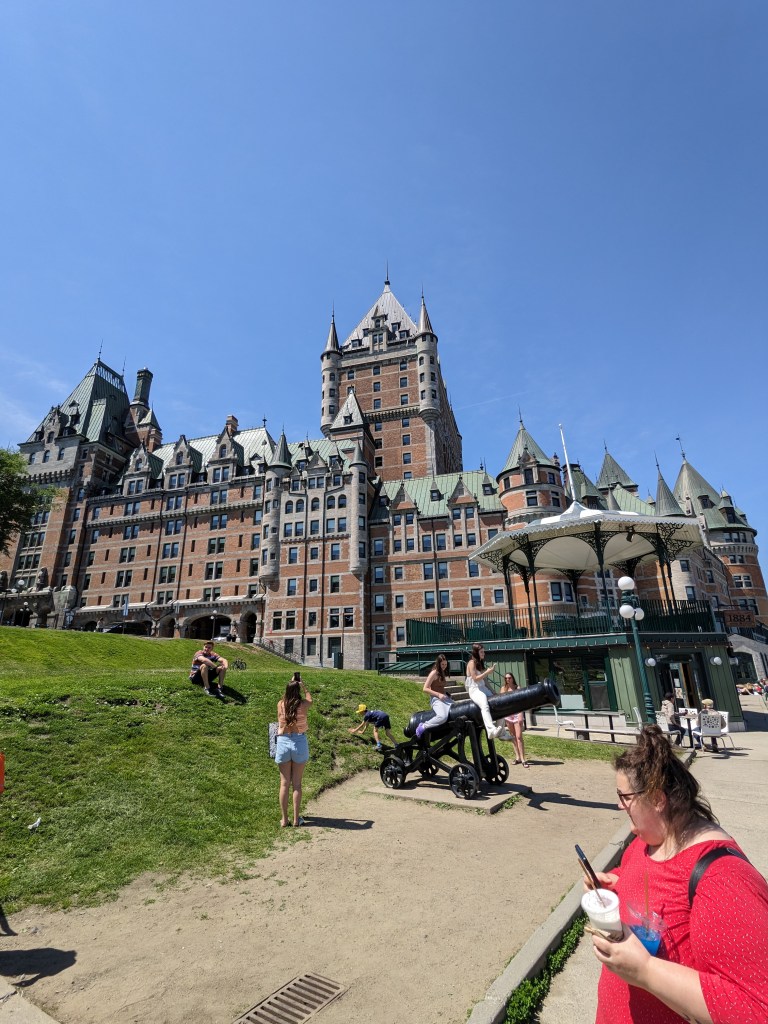
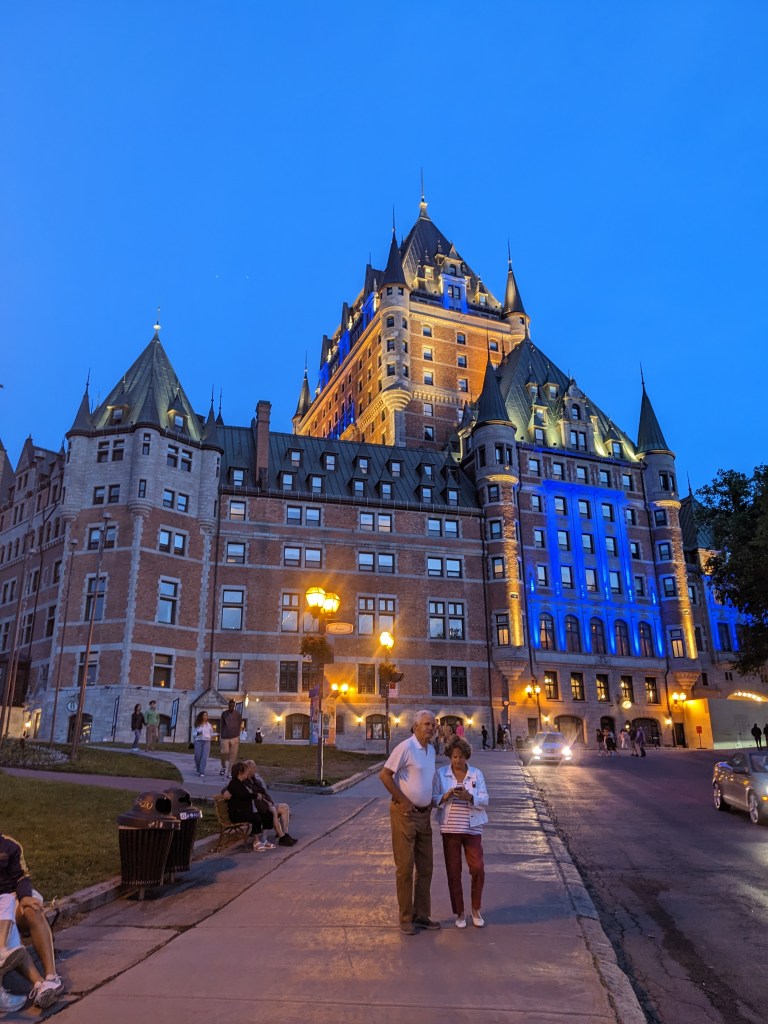
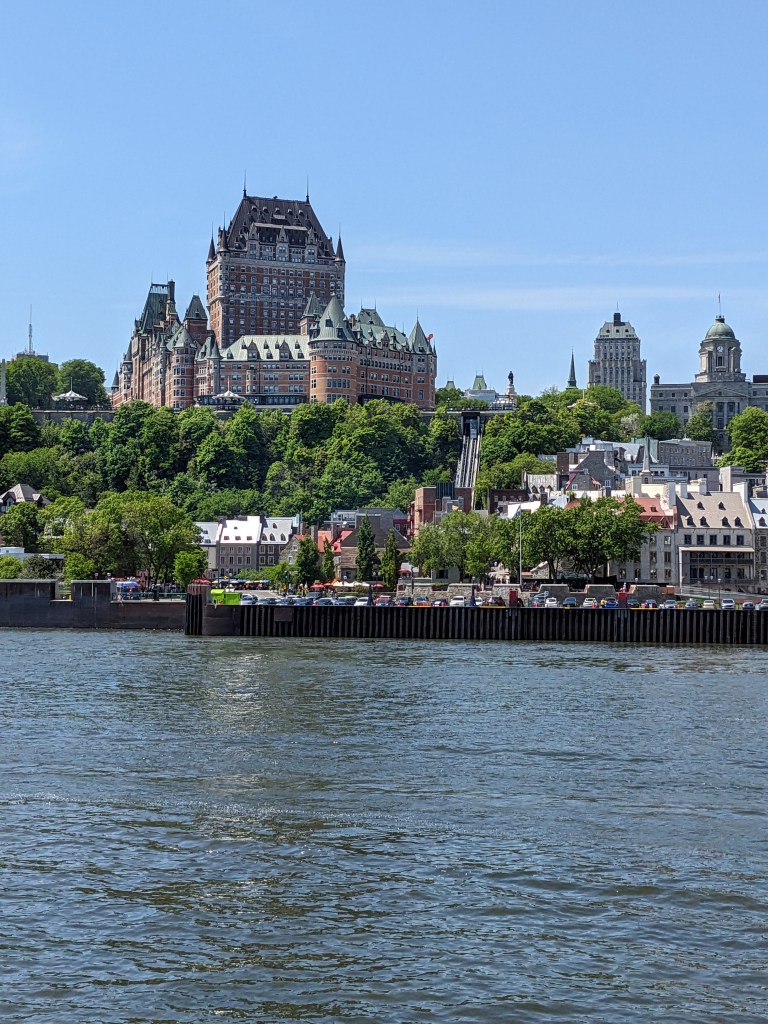
The most famous place in this historic city is the Fairmont Le Château Frontenac, better known as the Château Frontenac. The Château Frontenac is a 5-star hotel that is considered the most photographed hotel in the world. The Château Frontenac is a massive, towering building with 600+ rooms and 18 floors whose majesty is augmented by being on the hillside overlooking lower town and the river. While the building itself is 262 feet tall it is another 177 feet above ground. Unsurprisingly, the hotel has its own Wikipedia page.
U.S. President Franklin Roosevelt and British Prime Minister Winston Churchill met at the Château Frontenac twice, in 1943 and 1944, to plot strategy for World War II. Canadian Prime Minister William Lloyd Mackenzie King also attended.
The hotel is featured in several movies including Alfred Hitchcock’s 1953 I Confess, Guardian: The Lonely and Great God, and French Girl. A list of movies filmed in Québec City is here.
We did not go to the Château Frontenac just to see the sights. We went there for lunch at Sam Bistro, named after Québec City founder and French explorer Samuel de Champlain. The food and ambiance were what you would expect from a 5-star restaurant. We got a great seat overlooking the boardwalk.
A stop at the Château Frontenac is a must for all visitors to Quebec City.
The Dufferin Boardwalk
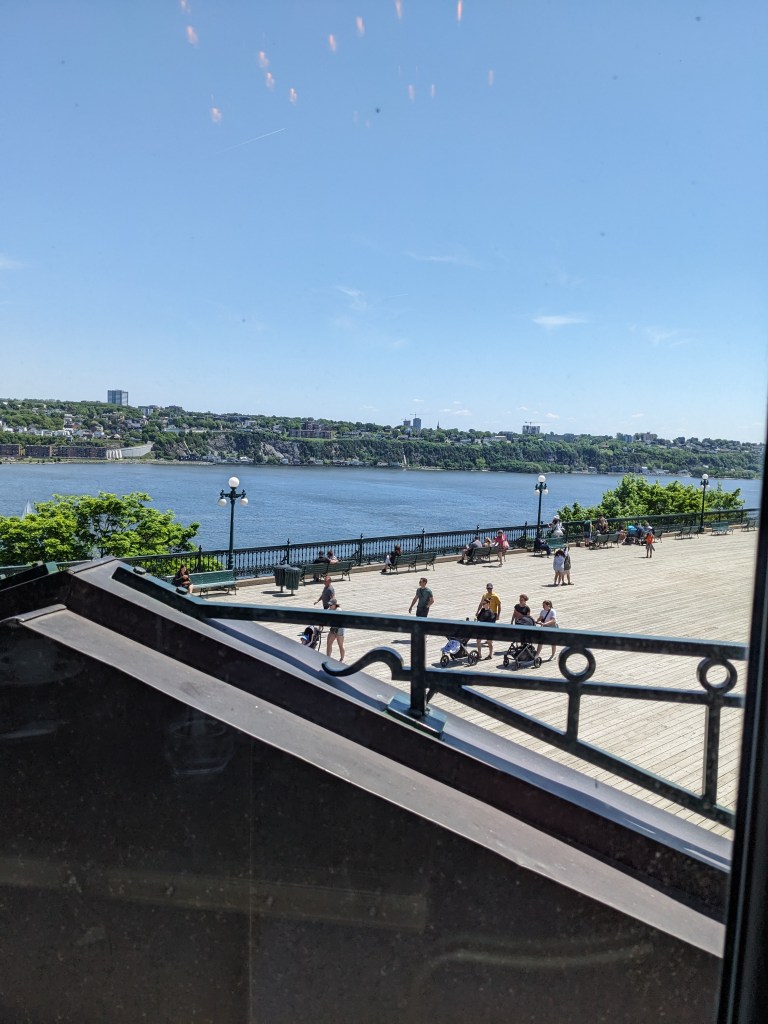
Right next to the Château Frontenac is the Dufferin Terrace boardwalk which runs at the top of the cliff providing great views of the St. Lawrence and overlooking “lower town” on one side with the Plains of Abraham and Old Québec City’s “upper town” on the other side
Walking History Tour
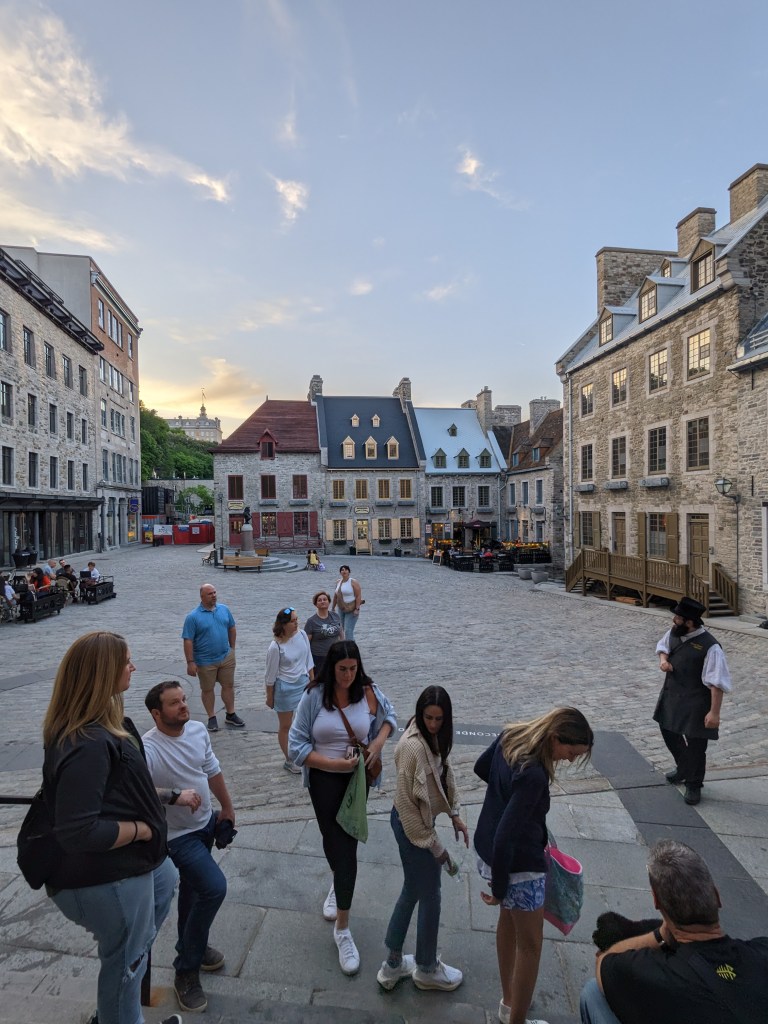
As a fan of history, I always take a history tour when possible. We took the Immersion Québec tour from Tours Voir Québec. The tour begins across from the Château Frontenac and loops around the Old Québec City and ends in the Quartier Petit Champlain. Tours are available in English and French. Our guide was a knowledgeable local. While a tour guide being knowledgeable about the subject is to be expected, this tour guide also provided a lot of knowledge about the city. She even provided a list of restaurant recommendations for all tourgoers.
The tour is a good way to learn the great history of Québec City while also experiencing the charm of the city as the tour covers several sections of Old Québec City.
Upper Town Vs. Lower Town
In addition to a divide between Old Québec City and the rest of the city there is a division between “Upper Town” and “Lower Town” in Old Québec City. Upper Town is above the cliff. Lower Town is below and on the riverside. There are two efficient ways to make the transition between the two.
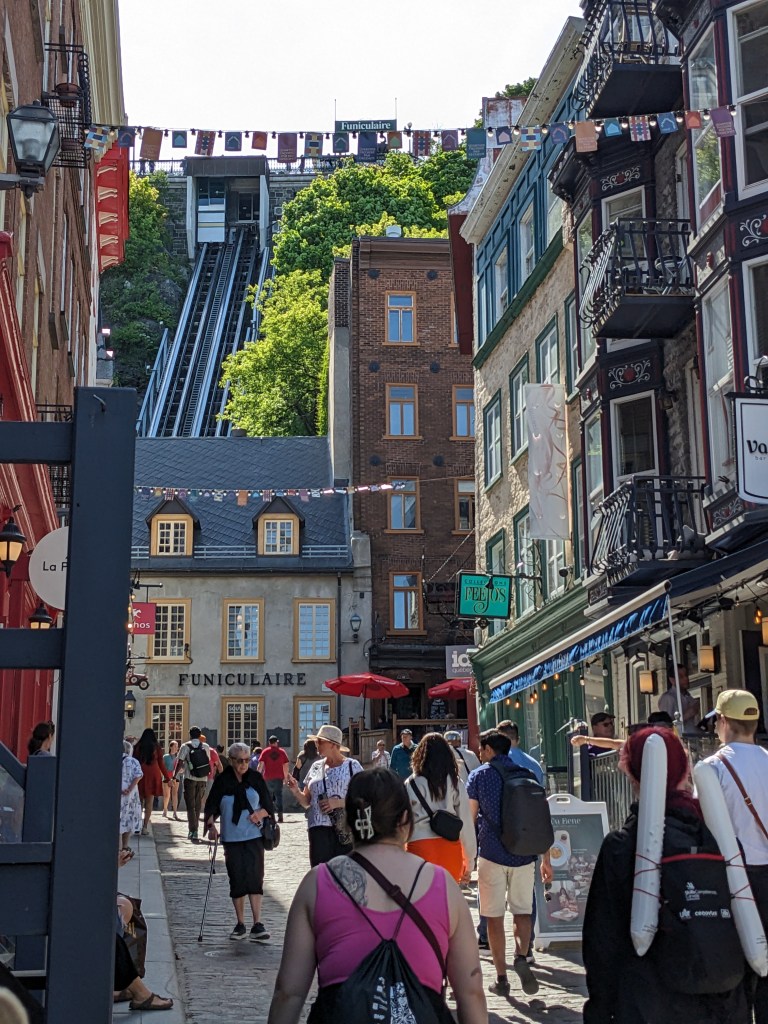
The first is the Old Quebec Funicular. This is an inclined elevator that has terminuses at the Dufferin Terrace and Quarter Petit Champlain.
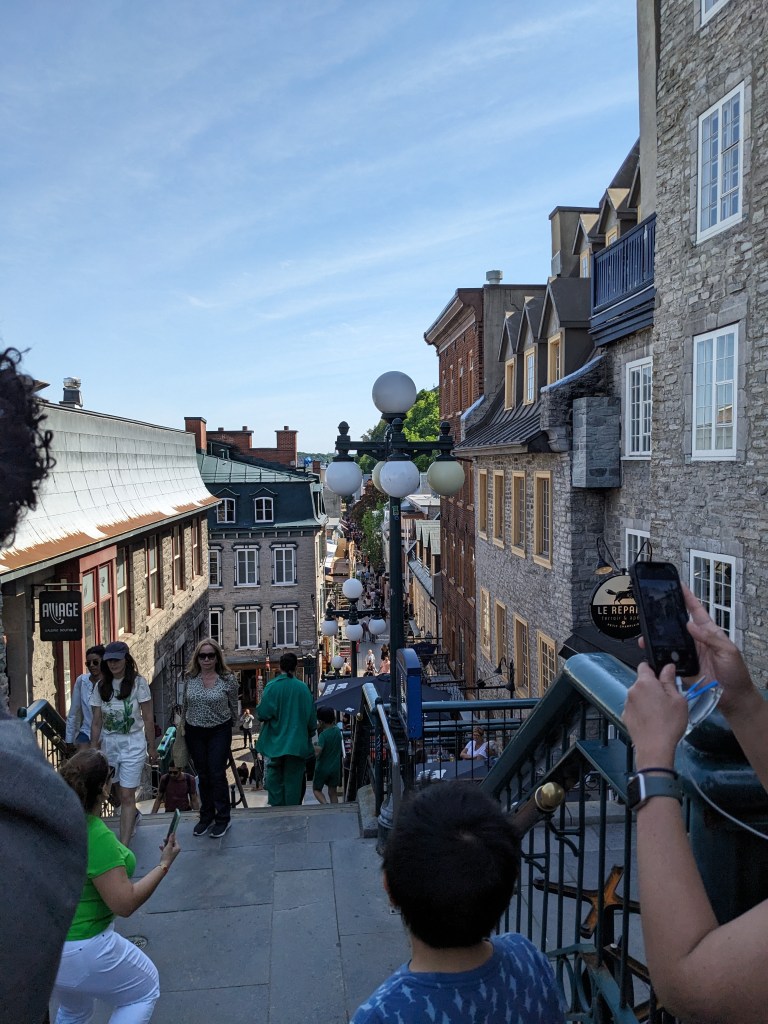
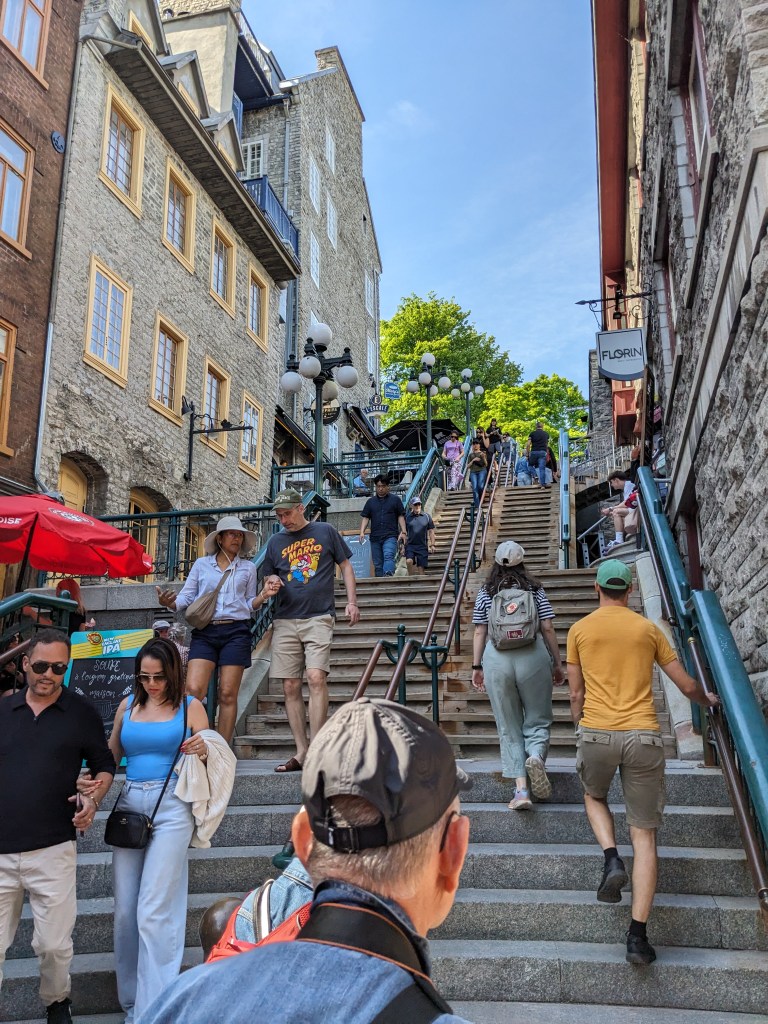
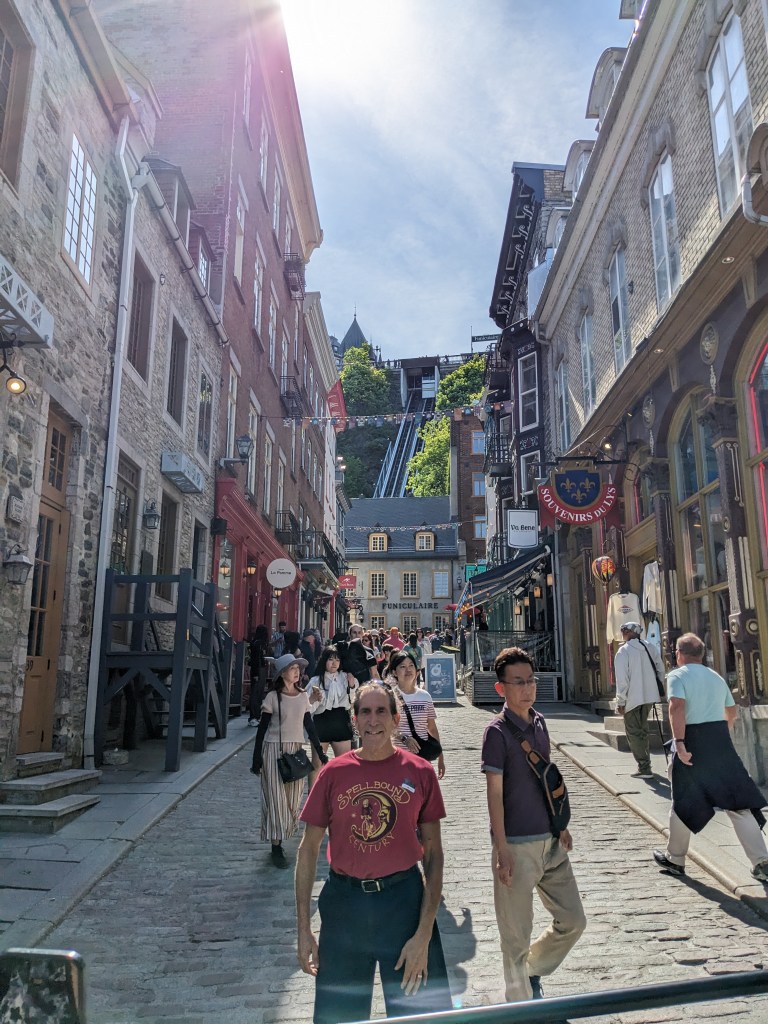
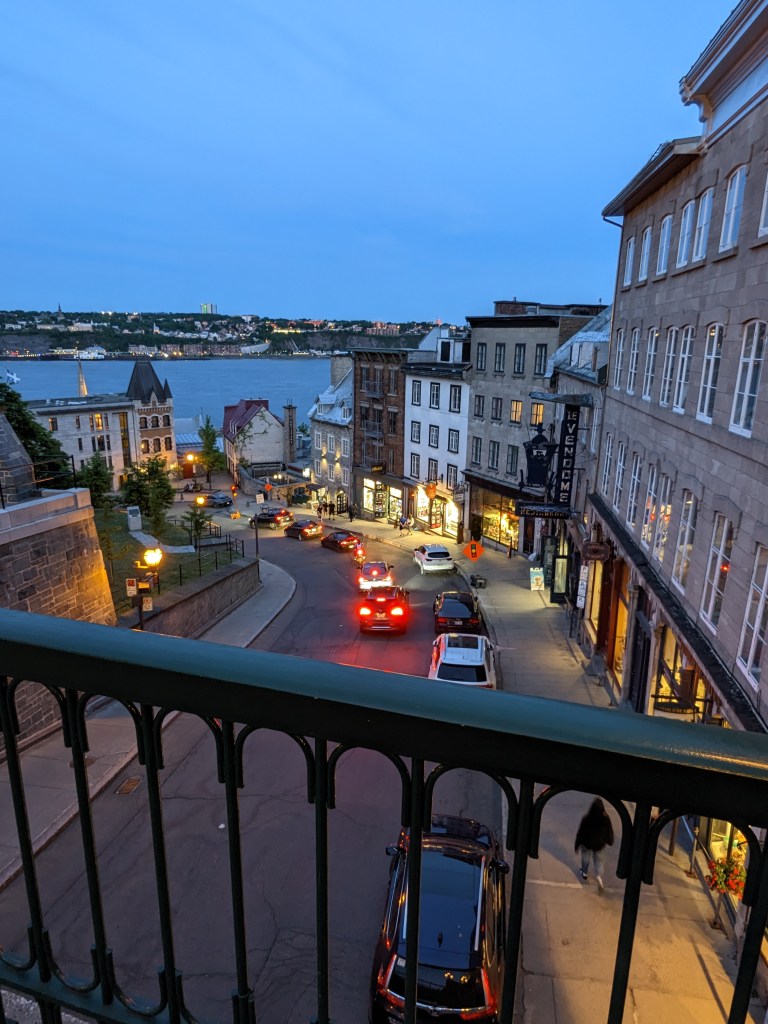
The other route, which we used, is the Breakneck Stairs. These are 59 steep steps, so it is a lot easier on the way down than up! The stairs provide a good viewpoint and have restaurants and shops you can stop at. There is merit to taking time at one of the restaurants to enjoy the view.
Quartier Petit Champlain
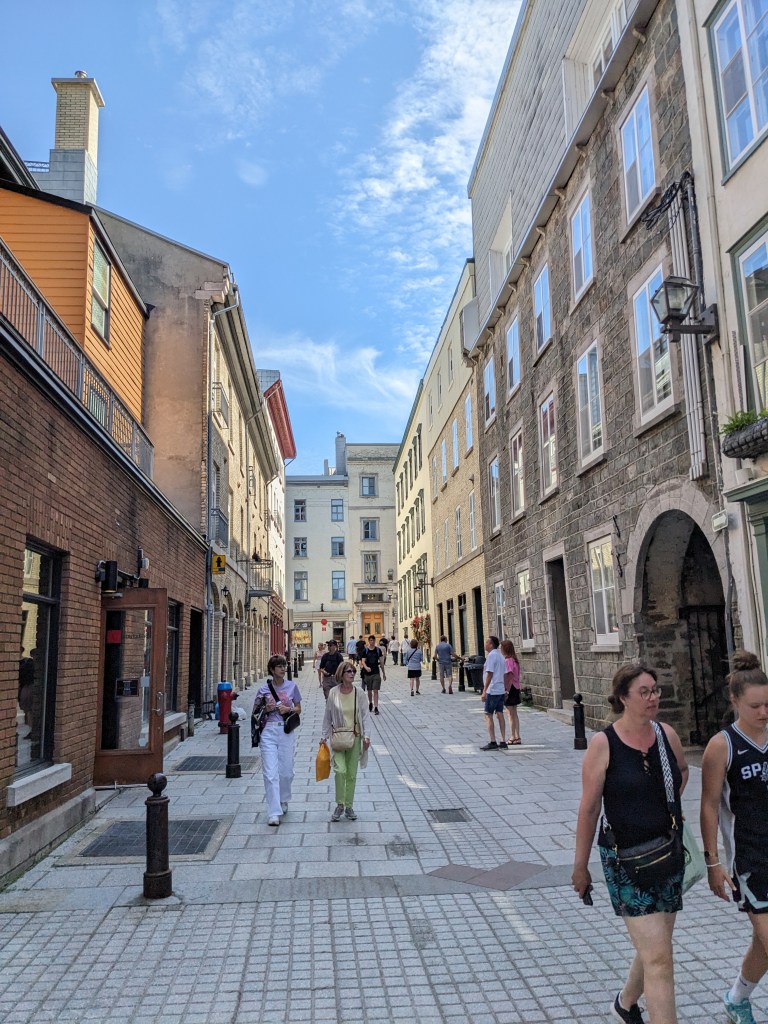
Petit-Champlain is the highlight of the lower town and a small but stunningly beautiful commercial zone between the river and upper town. It features a range of shops and restaurants along picturesque small pedestrian only cobblestone streets. Among the sites in this area of town is Place Royale which is where Québec City originally was founded. The area has been restored to its 17th century look and feel and is akin to a live time capsule. The centerpieces are the oldest stone church in North America and a large cobblestone “town square” like area.
Petit-Champlain consists of several streets. One of them, Ru du Petit Champlain, consistently rates as one of the prettiest streets in the world (see Conde Nast here) and is considered by many to be the prettiest in Canada.
There are several restaurants in Petit-Champlain where you can sit back outside and experience the atmosphere.
Museums
Québec City has two major museums. One is Museum of Civilization, or Musée de la Civilisation in French, which is the most popular museum in Québec City. The museum, as its name suggests, catalogues the culture and history of French Canadians. It is informative with signage in both French and English. I enjoyed their special exhibit on professional wrestling which featured many historic artifacts from the heyday of the World Wrestling Federation in the 1980s and 1990s. The Musée de la Civilisation conveniently sits between Petit Champlain and the St. Lawrence River.
The other big museum is the art museum, the Musée national des beaux-arts du Québec. We did not get around to going here but plan to do so the next time we are in Québec City.
Boat Tour
Given the importance of the St. Lawrence River to Québec City’s history and development a trip to Québec City would not be complete without a boat tour. We took a Croisieres AML tour. The boat docked at lower town and navigates all the way to Île d’Orléans and Montmorency Falls before returning back. The tour is a way to experience the majesty of the St. Lawrence while also observing the beauty of Québec City from another vantage point.
One thing that struck me is that, in contrast to American cities who are ringed immediately by smaller cities and/or suburbs, there was not much directly outside of Québec City which only adds to the charm of the city.
Old City vs. New
While tourists naturally gravitate towards Old Québec that is not the entire city. We went to downtown to get a different experience. Different it was. While the old city consists mostly of tourists and is an area where English is spoken frequently, the “new city” has few tourists, and you rarely hear English other than employees using it to speak to visitors like us. For these reasons it was good to get out of the tourist area and see what the more typical experience of the city is. The downtown looks not too dissimilar to any other U.S. or Canadian downtown visually, but the infusion of French culture can be felt everywhere.
Towering Views
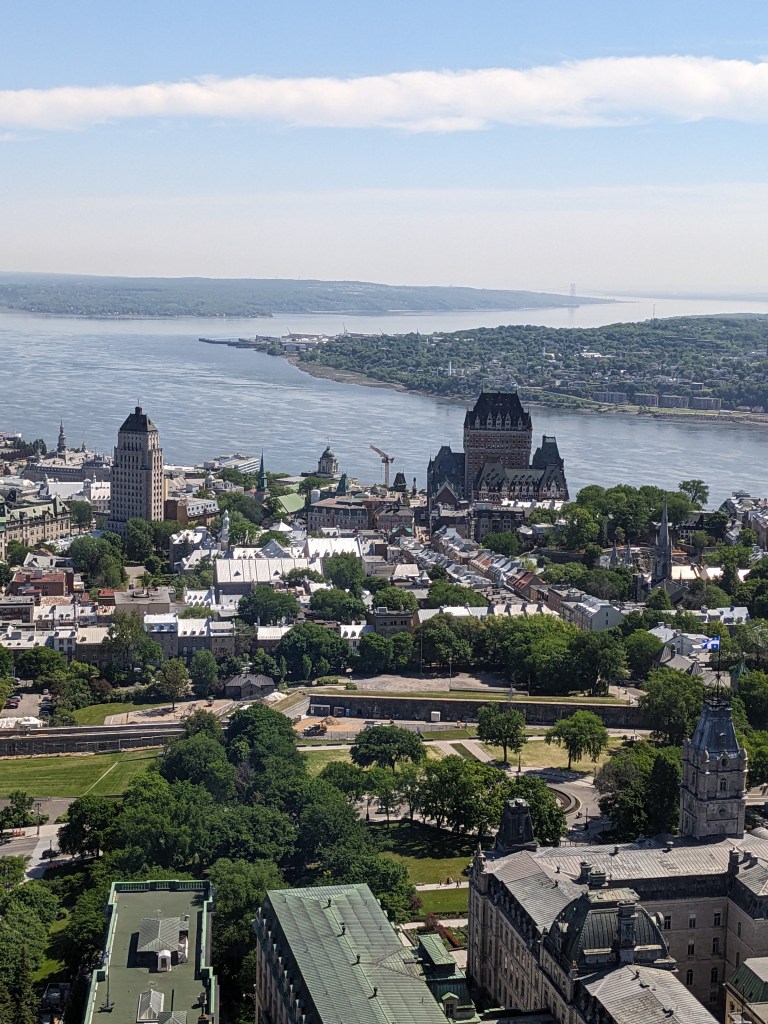
Speaking of different vantage points of Québec City, the Observatoire de la Capitale is another must visit. This is in the Édifice Marie-Guyart, also known as the Complexe G, is the tallest building in Québec City standing 33 stories and 433 feet tall. The top floor has an observatory where you can purchase tickets to see Québec from 433 feet along with learning about the history of the city and province as you navigate your way around the floor. The observatory is right in downtown and hence is a stone’s throw away from the main American hotels.
Parliament (National Assembly of Québec)
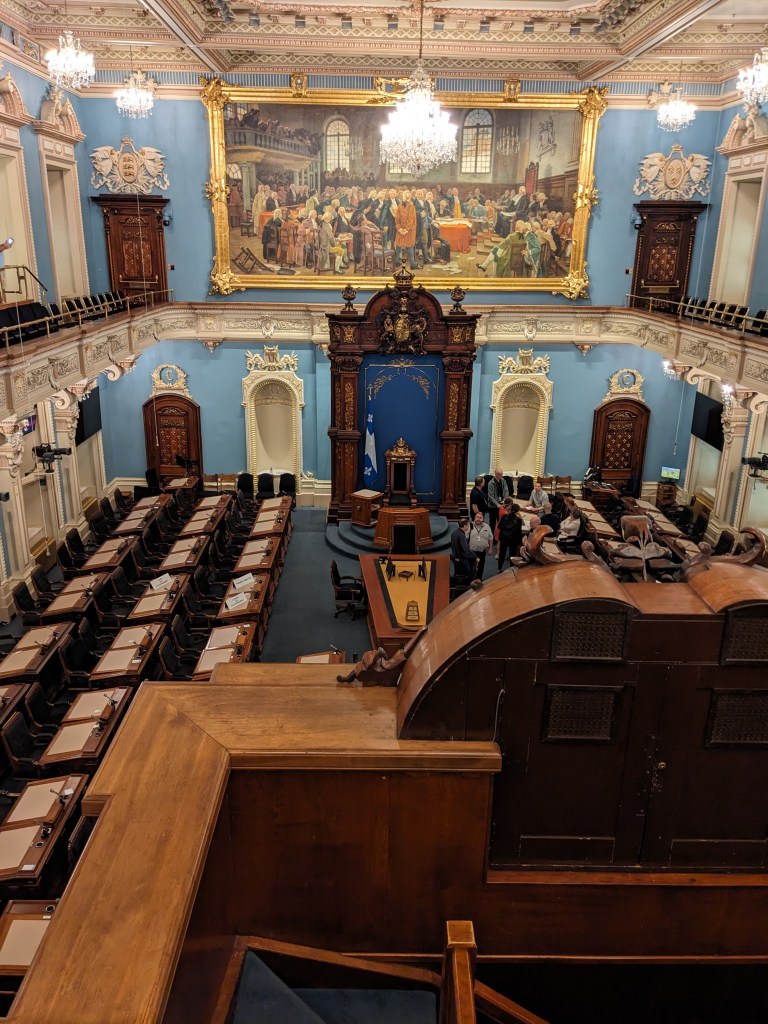
It also is a stone’s throw away from, and provides a great view of, the Parliament Building of the National Assembly of Quebec, or Assemblée nationale du Québec. This is the provincial legislature of Québec but note the name. National assembly, not provincial assembly. The name is a testament to the staying power of French-Canadian identity. As our tour guide put it, the assembly is there to represent the “French Nation.” As another indicator of this identity, you rarely see a U.S. state flag outside of government buildings or hotels. In Québec City the Québec flag was as common as the Canadian flag if not slightly more.
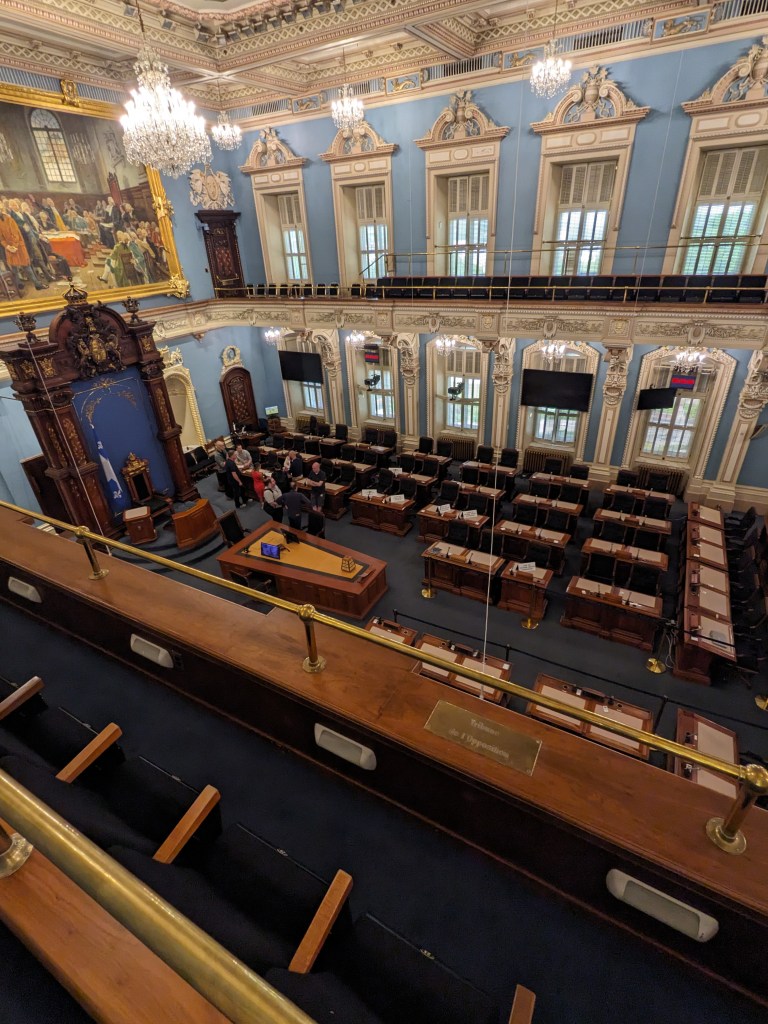
The Assembly itself is a beautiful, majestic building both inside and out. The building is designed in the Second Empire Style similar to that of Philadelphia City Hall in Philadelphia, Pennsylvania.
The tour covers the gamut of activity that occurs at the building and culminates by taking you onto the parliament floor. There is a small gift shop with Québec themed items.
Île d’Orléans
While we did not get a chance to go to the Île d’Orléans I wanted to include it in the blog post because this is something that you should strongly consider doing. We will go here next time.
Île d’Orléans is a small island a short drive from Québec City. You can go there on your own or as part of a tour (the visitor’s center on the green across from the Chateau has all the information, and tickets, on tours). In contrast to a city, it provides a rustic rural location that you can see featured in the movie the French Girl.
Believe in Ghosts?
As always, we took a ghost tour with the Les Visites Fantômes De Québec tour. The tour began at the lower part of Petit Champlain, working its way through Lower Town up the hill and up to the other side of the wall before turning back to lower town to get to historic sites like the Laval University campus in Québec City that dates back to the 1600s. The tour guide was informative, funny, and the stories compelling and the tour stopped at several picturesque and historic points. You could learn a lot about the city’s history and its look and feel simply by taking the tour.
English vs. French
While Québec City is the capital of a proud French speaking province, and the seat of the French-Canadian nation, you don’t need to brush up on your French prior to visiting. People working and living in the city will know both languages.
Conclusion
Québec City is one of the best kept secrets for Americans. While we often hear of Toronto, Montreal, and Vancouver, Québec City flies under the radar. Québec City’s unique charm, its history, its physical features, and the commitment to preserve the vibe, character, and architecture of the past make the city well worth visiting. That it boasts a Europe-like feel while still in North America is a cherry on top. If you are looking for one place to visit in Canada Québec City warrants strong consideration to be that place.




 Omar Masood's Blog
Leave a comment