
For my second post, I decided to tackle the Formula 1 (F1) greatest-of-all-time (GOAT) debate.
I don’t factor in total race wins because the number of races has increased substantially across eras, making apples-to-apples comparisons difficult. Instead, my criteria heavily emphasize championships, longevity, the ability to succeed in different circumstances, and the level of competition faced.
As far as raw driving skill goes, I think everyone at this level is elite enough that they have no meaningful weaknesses. The debate is really about what they accomplished, who they accomplished it against, and for how long.
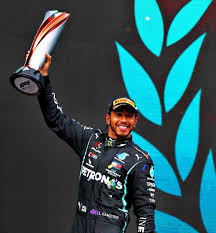
1) Lewis Hamilton
Hamilton is tied for the most championships and, in my view, deserves to hold the record outright. He has been teammates with three World Drivers’ Champions (WDCs): Fernando Alonso, Jenson Button, and Nico Rosberg—and he beat all three over the course of their careers together.
Hamilton’s prime also came during an exceptionally competitive era that featured Kimi Räikkönen, Sebastian Vettel, and Max Verstappen among its headliners. He dominated at Mercedes in a way we hadn’t seen since Michael Schumacher at Ferrari, but he also won a championship with McLaren in 2008. His championship-contending window has lasted well over a decade, from 2007 through 2021.
Why he is the greatest: He has the most championships, dominated for an extraordinarily long period, defeated three WDC teammates, and did it during a very competitive era.
Why he is not the greatest: Hamilton got the better of Button and Rosberg overall, but both beat him in individual seasons, as did George Russell. He also outperformed Alonso over their careers, but in 2007—their only season together—they finished tied in the standings. That means four teammates have either beaten or tied Hamilton over a season.
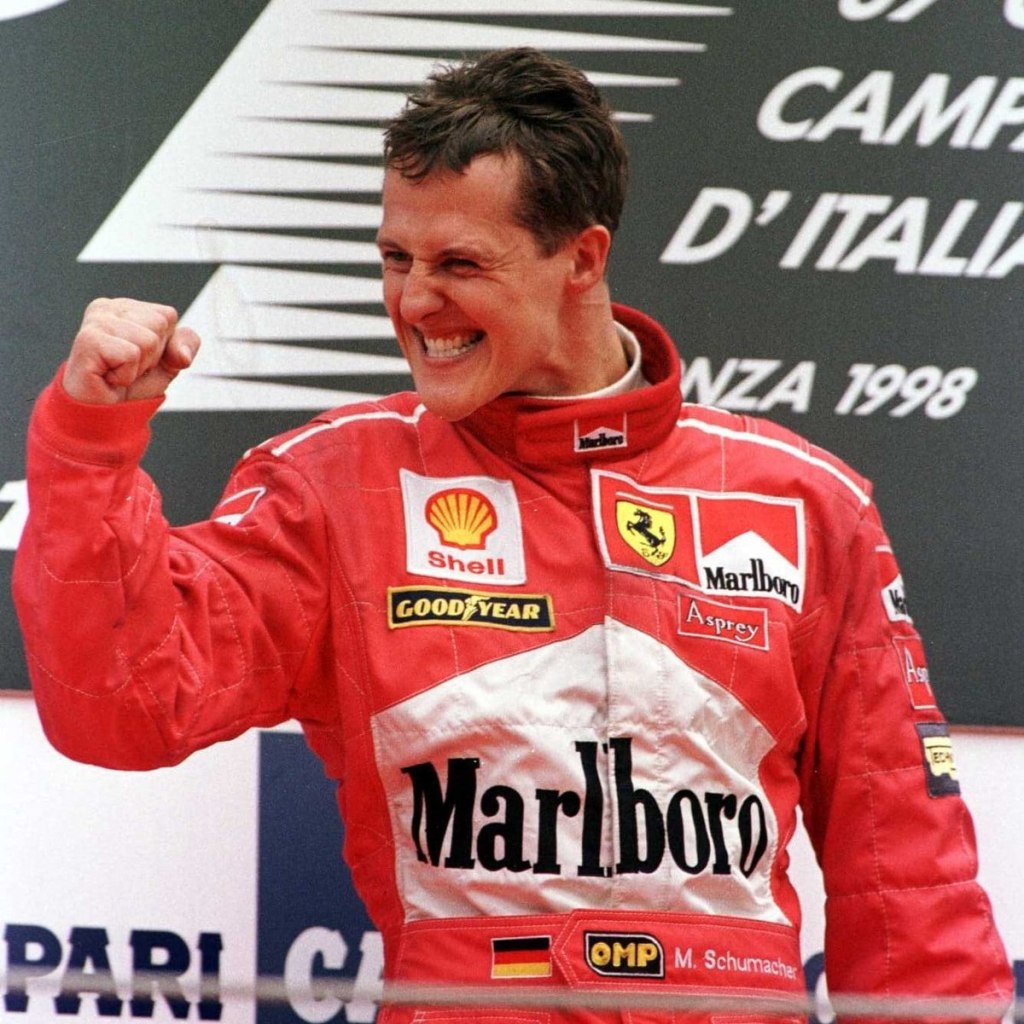
2) Michael Schumacher
Schumacher is also tied for the most championships and was a championship contender for more than a decade, from 1994 through 2006.
He took a good—but not great—Benetton team to back-to-back championships before leaving for a Ferrari team that was, at the time, a midfield operation. I’m not aware of another driver voluntarily leaving a championship-caliber team for an average team while still in his prime. Schumacher went from champion to a distant third in 1996, but by 1997 he had Ferrari genuinely competing for championships. He then won five straight titles from 2000-2004.
In 2006, he came close to another championship before finishing second and retiring. His later comeback with Mercedes, however, was a shadow of his former career.
The biggest knock against Schumacher is the strength of his teammates and competition. Ferrari deliberately gave him relatively weak internal competition. His biggest championship rivals were Mika Häkkinen, Damon Hill, Jacques Villeneuve, and Juan Pablo Montoya. That level of competition is not on par with what some other GOAT candidates faced.
Why he is the greatest: Schumacher took on the Ferrari challenge instead of staying with Benetton or pursuing the dominant Williams seat. The number of key people who followed him to Ferrari is a testament to his leadership. He helped transform Ferrari into a juggernaut. If I were building a race team from scratch, Schumacher might be my choice because he was such a complete package.
Why he is not the greatest: He dominated while ensuring he had little competition within his own team. When Ferrari had the dominant car, Schumacher was essentially guaranteed the championship. His era was also relatively weak compared with the eras of some other candidates. He briefly had Nelson Piquet as a teammate early in his career, but otherwise never had a WDC teammate during his prime. Felipe Massa came close to winning the championship in 2008, but that was after Schumacher had retired.
If Senna had lived, or if Alonso had been a few years younger, Schumacher’s career might have looked very different. But we have to evaluate the record as it actually happened.
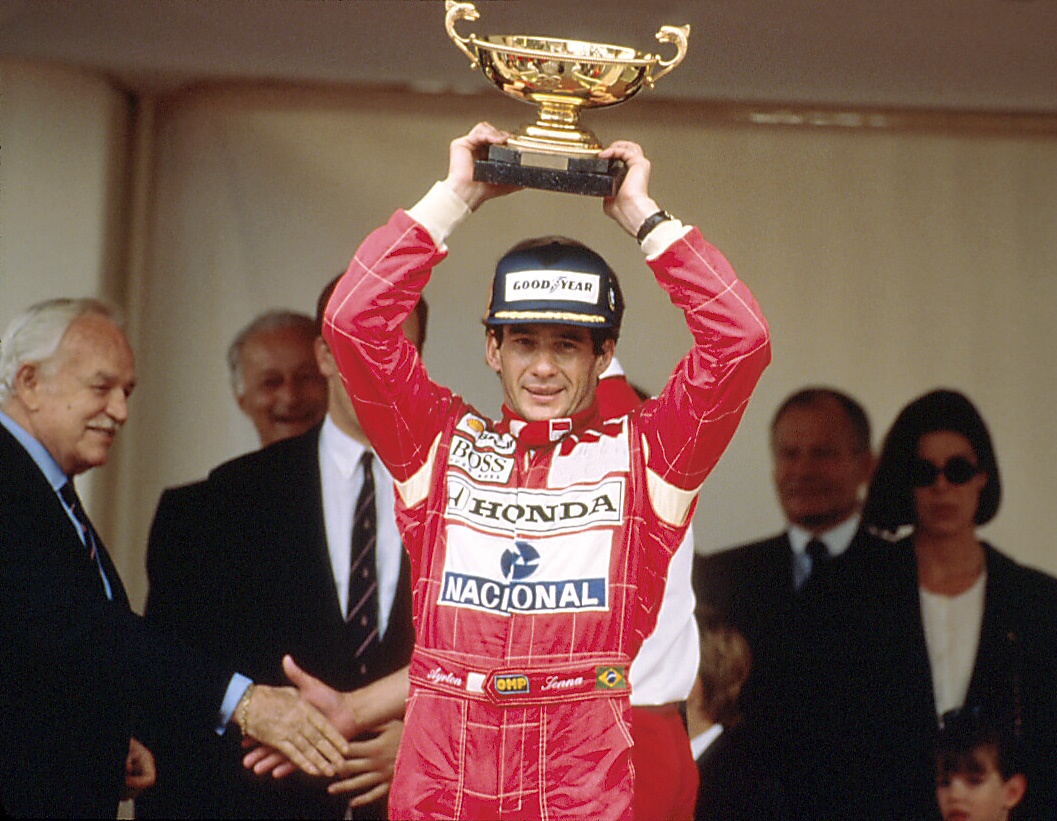
3) Ayrton Senna
Senna is perhaps the most revered F1 driver of all time and is considered by many to be the fastest. His rivalry with Alain Prost is legendary. Senna won three championships and developed a reputation as the king of Monaco before his career—and life—were tragically cut short.
The biggest feather in Senna’s cap is that he was teammates with Alain Prost, himself a legitimate GOAT contender, while both were in their primes. Their competition was incredibly close, and each won a championship during their two years together. Senna generally had the advantage when both cars finished.
Senna also had several other notable teammates, including Michael Andretti, Mika Häkkinen, and Damon Hill, although Häkkinen and Hill were only with him briefly and Andretti struggled badly in F1. Gerhard Berger, a quintessential No. 2 driver for a top team, was his most important teammate after Prost.
Senna competed in one of F1’s strongest eras, with Prost, Nigel Mansell, and Nelson Piquet overlapping with him in their primes. Niki Lauda and Michael Schumacher also raced during parts of his career, although their primes did not overlap significantly with Senna’s.
Why he is the greatest: Senna was arguably the premier driver in an era with an extraordinary concentration of elite talent. Most importantly, he went head-to-head with another GOAT contender, Prost, in identical machinery while both were in their primes—and came out on top.
Why he is not the greatest: Senna’s GOAT case is hurt by his lack of longevity. Obviously, that isn’t his fault, but we can’t give him credit for what might have happened. And that is perhaps the biggest tragedy, both for the person and for the sport. Had Senna lived, he may have won the championships in 1995, 1996, and 1997, potentially setting up several years of an incredible Senna-Schumacher rivalry.
If the question were “Who was the best?” rather than “Who was the greatest?”, Senna might actually be my pick.
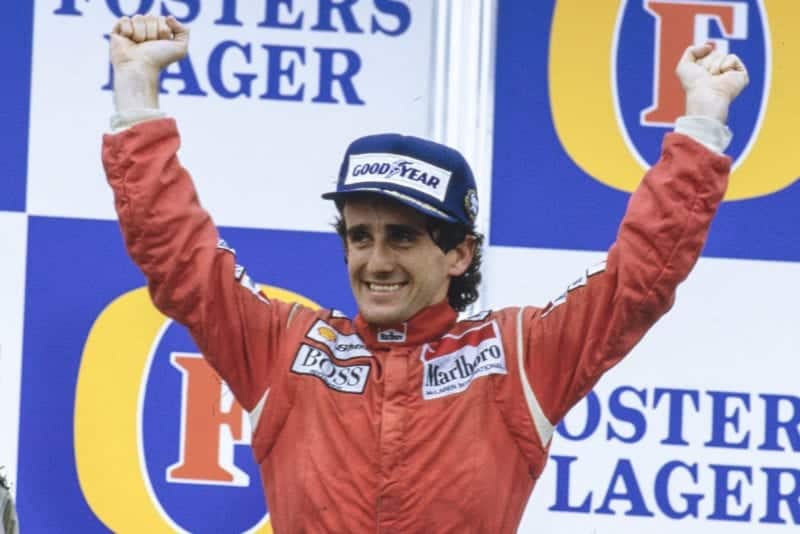
4) Alain Prost
Senna is more remembered, but Prost actually won more championships and more races. Only Hamilton, Schumacher, and Fangio have won more championships than Prost’s four.
Prost contended for championships from 1981 through 1993 and was known for his intelligence, consistency, and ability to find a way to win while using the least amount of equipment possible. His smooth driving style helped preserve his machinery and avoid unnecessary retirements.
Prost raced in the same era as Senna but faced greater internal competition. His teammates included Senna, Niki Lauda, Nigel Mansell, Damon Hill, and Keke Rosberg—five World Champions. Prost beat all of them except Senna.
And he did better against Senna than people sometimes remember. Both won a championship as teammates. Prost actually outscored Senna 105-94 over the 1988 season, although Senna won the championship because only a driver’s best 11 results counted under the points system at the time. That said, whenever both finished a race, Senna generally had the advantage.
Prost was also a rare driver to retire as the reigning World Champion.
Why he is the greatest: Prost’s strongest argument is that no driver beat more great drivers while competing in the same equipment.
Why he is not the greatest: He was ultimately outraced by another driver. There is obviously no shame in losing to Senna, but if we are trying to identify the greatest driver ever, it is difficult to put Prost ahead of someone who beat him head-to-head as a teammate.
5) Juan Manuel Fangio
Fangio won an incredible 47% of his races, five championships in seven full seasons, and finished runner-up in the other two. No driver dominated his era more thoroughly.
Why he is the greatest: The numbers speak for themselves. His level of dominance is unmatched.
Why he is not the greatest: Longevity is the obvious weakness. Of course, F1 didn’t even exist until Fangio was 39, so this isn’t entirely his fault. More importantly, F1 was a very different sport in the 1950s. Fangio never competed in more than eight races in a season and raced as few as six in some seasons that are considered “full” seasons.
Honorable Mentions
In no particular order:
- Jim Clark
- Jackie Stewart
- Niki Lauda
- Fernando Alonso
- Max Verstappen
So that’s my top five.
What do you think? What do you agree or disagree with? Who is your F1 GOAT, and what would your top five look like?


Leave a Reply