
I did an F1 GOAT post, so a NASCAR GOAT post felt like the logical next one for America’s top racing series.
My criteria are the same as they were for F1: I highly value championships, longevity, the ability to succeed in different circumstances, and the level of competition faced.
1. Dale Earnhardt
Earnhardt is one of three drivers tied for the most championships (7), and he was either champion or runner-up for nearly half of his career. He was known for his aggressive driving style and incredible connection with fans. He was a title contender for more than two decades, winning his first championship in 1980 and finishing runner-up as late as 2000.
Known as “The Intimidator,” he drove arguably the most iconic car in American racing history: the black GM Goodwrench #3.
Why he is the greatest:
Earnhardt won championships with two different teams and three different crew chiefs, while coming close with a fourth. He did this despite rarely being considered to have the outright fastest car.
By comparison, Johnson and Petty never won a championship with another team and did their championship-winning with the same crew chief. Earnhardt showed the adaptability you would expect from the greatest driver ever.
He also has a better career average finish (11.1) than Petty (11.3) and Johnson (13.4 as of now). And while Hendrick Motorsports has been a juggernaut regardless of who drives for them, Richard Childress Racing has never won a championship without Earnhardt despite having Kevin Harvick, Ricky Rudd, Kyle Busch, Jeff Burton, and Ryan Newman among its alumni.
Finally, Earnhardt arguably has the most impressive win in NASCAR history. At Talladega, he charged from 18th with four laps to go, took the lead coming to the white flag, and won what turned out to be the final race of his career.
Why he is not the greatest:
The obvious knock is that Earnhardt ranks first in championships but only eighth in race wins. His win total was also hurt by the shorter schedules of his prime compared with Petty and Johnson. However, Darrell Waltrip was his contemporary and won more races.
Earnhardt was still an elite driver when he died, so it’s reasonable to think he could have finished with 85 or so wins, but we’ll never know.
He also raced in an era that had more competitive cars than Petty’s era, but fewer than Johnson’s. That said, more teams won championships during Earnhardt’s prime than during Johnson’s.
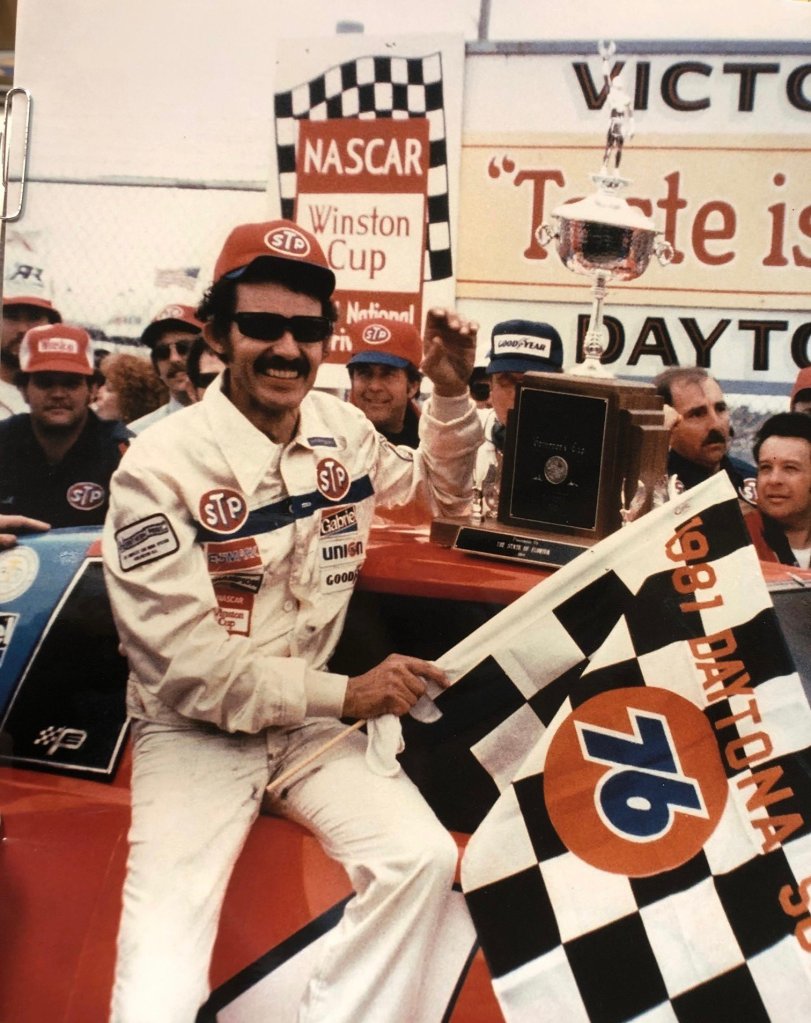
2. Richard Petty
Petty also has seven championships and stands alone with 200 race wins. The next driver on the all-time wins list, David Pearson, has barely more than half that total with 105.
Petty was runner-up in 1960 and won his final championship in 1979. Another massive fan favorite, he became known as “The King,” and his STP #43 is the only car that really rivals Earnhardt’s #3 in terms of iconic status.
Why he is the greatest:
If you go strictly by the record books, Petty is #1, hands down.
Seven championships and 200 wins is an absurd résumé.
Why he is not the greatest:
The biggest issue is the level of competition. Petty raced in an era with relatively limited competition and schedules that sometimes exceeded 60 races, both of which helped inflate his win totals.
He also won all seven championships and 192 of his 200 races with the same crew chief. He never demonstrated that he could win championships without having the best car.
Finally, his biggest rival, David Pearson, was a part-time driver for most of his career. That helped clear the way for Petty to rack up seasonal championships.
3. Jimmie Johnson
Another seven-time champion, Johnson is best remembered for winning five consecutive championships at his peak.
He never had the same connection with fans or charisma as Earnhardt, Petty, or even his Hendrick teammates Jeff Gordon and Dale Earnhardt Jr. He finished runner-up in 2003 and won his final championship in 2016.
Why he is the greatest:
Five straight championships. Nobody really comes close.
Cale Yarborough won three straight. Earnhardt and Petty won four championships in five years, but neither was particularly close to winning the title in the year they missed.
Johnson accomplished his five-year run during the full-blown multicar era, when far more drivers had access to winning equipment than in previous eras.
Why he is not the greatest:
Johnson is tied for first in championships but only sixth in wins, with just seven more victories than Earnhardt.
The bigger issue, however, is how dependent his career was on crew chief Chad Knaus. Without Knaus, Johnson’s results fell off dramatically.
Hendrick Motorsports was also clearly the class of the field. Although there were more competitive teams capable of winning individual races, there was actually less variety among championship-winning organizations during Johnson’s era.
Since 2005, every champion has driven for Hendrick, Gibbs, Penske, or a satellite team using Hendrick or Gibbs equipment. Hendrick was a championship-caliber organization both before and after Johnson. Four other drivers have won championships for Hendrick, with two more winning with satellite Hendrick teams.
That raises the obvious question: How much of Johnson’s success was Johnson, and how much was the car?
There’s another problem: Johnson won in an era where you didn’t necessarily have to be the best driver over the course of the full season.
For example, in his final championship season, Johnson failed to finish in the top 10 in 60% of the races and was only seventh in the season-long points standings before the playoff reset.
NASCAR also doesn’t rotate the playoff tracks. If you look at Johnson’s strongest tracks and then look at the schedule for the final 10 races, it’s hard not to notice how favorable that schedule was for him.
So was Johnson the greatest driver ever, or was he simply an all-time great at gaming a flawed championship system while having the best car, team, and crew chief?
I also ding him for longevity. His championship-contending window was about 13 years, and he never finished higher than 10th after turning 40.
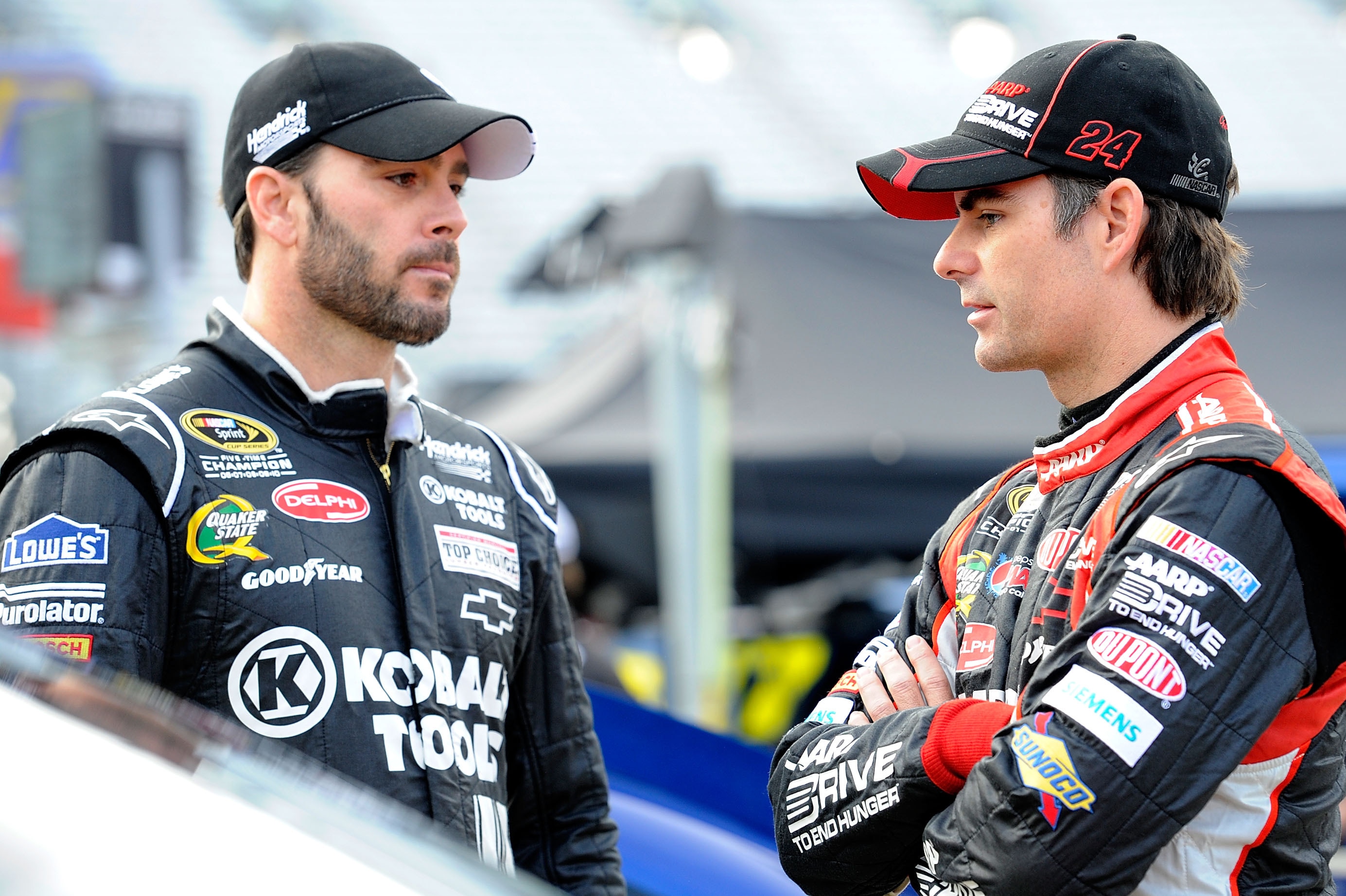
4. Jeff Gordon
Gordon is the first driver on this list who has a legitimate Mount Rushmore case but, in my opinion, not a strong enough GOAT case.
He took NASCAR by storm, to the point that there was legitimate discussion about whether he could challenge Petty’s 200-win record despite racing roughly 30 races per season during his prime.
Gordon had an extremely long championship-contending window, winning his first title in 1995 and finishing third as recently as 2015. He won four championships.
Why he is the greatest:
Gordon arguably had the highest peak of any driver on this list.
He won 40 races in a four-year span, including 33 in three seasons. During that stretch he won three championships and finished a close second in the other, losing to Hendrick teammate Terry Labonte.
Gordon was also hurt by NASCAR’s transition away from a traditional season-long championship format. Gordon fans can point out that he accumulated the most season-long points in seven seasons, although realistically teams would have adapted to whatever championship format existed.
Still, he almost certainly would have won the 2007 championship under virtually any traditional full-season format.
Why he is not the greatest:
There are three major problems with Gordon’s GOAT case.
First, he has considerably fewer championships than the drivers normally ranked ahead of him.
Second, while his peak was incredible, he was an elite—but not dominant—driver without Ray Evernham. He won only one championship in the 15 full-time seasons in which Evernham wasn’t his crew chief. To be fair to Gordon, that’s still much better than you can say about Johnson or Petty.
Finally, he was beaten by Jimmie Johnson while driving the same equipment.
Gordon fans understandably argue that he was past his prime, but Gordon was only 29 and the reigning champion when Johnson entered the sport. Gordon is also only four years older than Johnson.
If you’re arguing that someone is the greatest driver ever, it’s fair to ask: Why was another driver consistently beating him in the same equipment?
5. David Pearson
The “Silver Fox” was the other half of NASCAR’s most memorable rivalry, his battle with Richard Petty.
Pearson won three championships and sits second on the all-time wins list with 105.
Why he is the greatest:
He beat Petty more often than Petty beat him when the two finished first and second.
He also won the championship three times in four seasons in which he ran a full-time schedule.
Why he is not the greatest:
Pearson was a part-time driver for much of his career, which allowed him to cherry-pick races.
Winning three championships in four full-time seasons sounds more impressive than it actually was because there were so few full-time drivers in that era.
For example, in 1966, his first championship season, nobody ran every race. Pearson ran 43 of 49 races, Petty ran 39, and Bobby Allison ran 33.
He also faced the same relatively limited level of competition that works against Petty’s GOAT case.
Honorable Mentions
Darrell Waltrip, Cale Yarborough, Tony Stewart, Lee Petty, Kyle Busch
One other driver worth mentioning is Joey Logano, who has now joined the elite group of drivers with at least three championships.
While it feels like Logano has been around forever, he’s still only 34 and is squarely in his prime while driving for one of NASCAR’s “Big 3” teams.
I fully expect him to crack the top 10 by the time he retires, and he has a legitimate chance to reach the top five if he can finish his career with 4–5 championships.
What do you agree or disagree with? Who is your NASCAR GOAT and what is your top five? And how high do you think Logano can climb before he retires?




Leave a Reply